ORTEX - Stock Market Analytics
- 3.6
- Rating
- 50.00K
- Installs
- Free
- Price

 Analysis by App-foxy
I approached ORTEX - Stock Market Analytics as a finance app for people who want more than a quick glance at a share price. Its focus is market analysis rather than household budgeting, bill splitting, or banking, so the useful question is not simply whether it looks polished. The real question is whether its information can help me make a calmer, better-informed decision before I buy, hold, or sell an investment.
My first impression is that this is a tool I would use alongside my normal investing routine, not as a complete replacement for a broker or a personal finance app. The developer, ORTEX, positions the product around the idea of using better information to support better decisions. That is a sensible approach for a market app, but it also means the value depends heavily on how carefully I interpret what I see.
How ORTEX fits into a shared household
A realistic use case is a couple or family sharing a tablet or occasionally discussing investments on one phone. One person may follow a company closely, while another simply wants to understand why a stock is being considered. In that situation, this app can act as a discussion aid: I can open the relevant market information, explain what I am looking at, and use the same screen as a starting point for a conversation.
You May Also Like

 Blood Strike: 2.5 Anniversary
Blood Strike’s Loadouts Turn Every Drop Into a Tactical Gamble
A close look at Blood Strike’s custom loadouts: how fast access to signature weapons reshapes its battle royale rhythm, rewards preparation, and narrows the gap between fights.

 Pandora - Music & Podcasts
Pandora’s Music Is Easy to Start, but Harder to Recover
Pandora’s strength is its low-effort path from a seed to a station. Its weak spot is how much confidence it asks you to place in connection, setup, and quiet recovery.

 8 Ball Pool
 Is Built on Rivalries, Rematches, and Routine
A close look at the rivalries, rematches, shared routines, and unanswered safety questions that turn a quick pool match into a persistent mobile community.

 Samsung Music
’s Quiet Strength Is Playing What You Already Own
Its reach comes less from spectacle than from dependable access to a personal library. That simplicity is both the app’s strongest retention engine and its ceiling.

 AccuWeather: Weather Radar
AccuWeather Review: A Quick, Clear Forecast for Everyday Decisions
For everyday plans, the best forecast is the one you can understand quickly. AccuWeather makes rain timing, radar, and local conditions easy to act on, with a few trade-offs.

 Hill Climb Racing
Why Hill Climb Racing Still Turns Crashes Into One More Run
A tiny car, a bumpy hill and one more upgrade: Hill Climb Racing keeps resurfacing because its simple chaos makes every near-miss feel personal.
More From Our News Desk
View All News


That does not make it a shared portfolio manager. I would not treat a common device as proof that everyone using it has the same investing goals, risk tolerance, or permission to act. The app belongs in the research part of the conversation. Any actual trade should still happen through the appropriate brokerage account, where the account holder, order details, and security checks are clearly defined.
This distinction matters more than it may seem. A teenager might use the app to learn how analysts examine a company, while an adult may use it before making a real investment decision. Those are very different activities even when they happen on the same screen. I found it more useful to think of ORTEX as a source of market context that supports a household conversation, rather than a place where a family should casually make decisions together.
The app is free to install, which makes trying it on a shared device relatively easy. However, its in-app purchase range runs from around nine dollars to around three hundred fifty dollars per item. That is a meaningful boundary for a household. I would avoid handing the device to a child with unrestricted purchasing access, and I would make sure the person responsible for payments understands that the free download does not mean every part of the experience is free.
For a household that only wants a simple watchlist or occasional price check, a broker’s own app may be less complicated. ORTEX becomes more interesting when several people are trying to understand the reasoning behind a market view. It is better suited to research conversations than to casual checking during breakfast.
What I would decide before installing it
Before putting it on a shared phone or tablet, I would agree on three simple rules. First, nobody treats an analytical view as a guaranteed prediction. Second, nobody enters payment details or buys optional content without the account holder’s approval. Third, nobody assumes that another person’s watchlist, searches, or conclusions represent the whole household.
Those rules are not app features; they are sensible habits around a financial tool. I mention them because market apps can create a false feeling of shared understanding. Two people may look at the same company and still reach different conclusions because they have different time horizons. One person may be researching a long-term investment, while another is interested in a short-term trade. The screen does not resolve that difference.
I would also keep personal brokerage credentials separate from a shared device. ORTEX can be part of the research workflow, but I would not use a family tablet as the place to store every financial login. If I were helping a relative learn, I would show the analysis and then let that person ask questions rather than leaving the app open with sensitive account information nearby.
That approach makes the app more useful. Instead of saying, “The app says this is a good stock,” I would ask, “What information are we looking at, what does it actually measure, and what would change our mind?” That small change turns the app from a shortcut into a learning tool.
Setup, account boundaries, and everyday access
ORTEX runs on Android devices using version 6.0 or later, so it can fit on many older phones and tablets still used around the home. The current version is 1.0.14. I would still check the device before planning a shared setup, especially if the device is old or has limited storage, because a compatible operating system does not automatically guarantee a comfortable experience on every screen.
Since this is a finance app, I would keep the device’s general account boundaries clear. A shared Google account, a family payment method, and an app used for investment research can easily become mixed together if nobody pays attention. The safest arrangement is for each adult to use their own device account where possible, with purchases requiring deliberate approval rather than a saved payment method that anyone can trigger.
I would also avoid leaving the application open when handing the device to someone else. This is not because I expect the app itself to be unsafe; it is simply good financial hygiene. Search history, saved interests, or visible market discussions can reveal more about a person’s financial plans than they intended to share. On a personal phone that may not matter. On a household tablet, it can.
One practical setup is to install the app on the adult’s personal phone first, learn how it fits into the research process, and only then decide whether it belongs on the shared device. That prevents a child or guest from becoming the first person to encounter purchase prompts or unfamiliar market terminology. It also gives the main user time to decide whether the app adds something beyond the tools already supplied by a broker.
The free entry point is helpful here. I can explore the basic experience before deciding whether it deserves a permanent place on a shared device. But I would not assume that installing it creates a complete family finance system. It does not replace a joint budget, a household investment policy, or a clear agreement about who is allowed to trade.
Using the app to coordinate investment conversations
The strongest household use I can see is structured coordination. Suppose one person notices a company that looks interesting and wants a second opinion. Instead of sending a vague message saying that the stock “looks good,” that person can open ORTEX, explain the information being considered, and identify the question that still needs answering. The other person can then challenge the assumption rather than reacting to a headline.
I would use a short routine: name the company, state the intended time horizon, describe the reason for looking at it, and write down what would invalidate the idea. This prevents the conversation from becoming a race to find the most encouraging signal. It also helps separate research from action. A family member can participate in the discussion without being expected to approve a purchase.
There is a less obvious benefit to this workflow. When two people share a screen, it becomes easier to notice that they are using different definitions of “good.” One may care about stability, another about growth, and another about avoiding companies they do not understand. ORTEX cannot settle that disagreement, but it can make the disagreement visible, which is valuable in a shared household.
I would be careful with notifications, screenshots, and casual messages. A market observation can look like a recommendation once it is removed from its original context. If I sent a screenshot to a relative, I would include the reason I was looking at it and the uncertainty around it. Otherwise, the image could be treated as a signal to buy even though it was only one part of my research.
Another useful approach is to separate learning sessions from decision sessions. During a learning session, a younger family member can ask what a market term means or why investors compare different types of information. During a decision session, only the authorized adult should decide whether any action is appropriate. This boundary keeps education open without turning shared access into shared financial control.
Age, trust, and the meaning of the content rating
The app has an Everyone content rating, which makes it approachable from an age-classification perspective. I would not interpret that as a promise that every market concept is suitable for every child’s understanding, or that a young user should make independent financial decisions. “Everyone” describes the content classification, not financial maturity.
For an older child or teenager, ORTEX could support a useful lesson about uncertainty. I would ask the child to explain what the information appears to show, what it does not prove, and why a market can move in an unexpected direction. That is more valuable than presenting analytics as a way to predict the future.
Trust is especially important on a shared device. I would explain that looking up a company is not the same as owning it, and that a family member’s private research should not be repeated as gossip. If the device is used by several people, I would also avoid treating visible searches as evidence of someone’s financial activity. Curiosity, schoolwork, and real investing can look identical in a search history.
Adults should also remember that a finance app can encourage overconfidence. A detailed-looking screen may feel authoritative even when the underlying conclusion remains uncertain. My rule would be to use the app to generate questions, not to remove the need for judgment. That is particularly important when a younger user is watching an adult make decisions and may copy the behavior without understanding the risk.
For a household with very young children, I would skip installing it on the child’s main device. The app is not a game or a simplified money-learning toy. Its purpose is market analysis, and that subject requires context. A parent could still demonstrate it during a supervised lesson, but I would not present it as an easy route to making money.
Where it beats ordinary alternatives, and where it does not
The usual alternative is a broker’s app. Brokerage software is normally the better choice when I need to check holdings, place an order, review transactions, or manage the account connected to my investments. It is built around execution and account administration. ORTEX is more appealing when I want to spend time examining market information before I decide whether an idea deserves further research.
A second alternative is a general finance news app. News tools are useful for headlines and broad market context, but they can encourage a reactive routine: read a dramatic story, feel urgency, and act quickly. A dedicated analytics app can push me toward a more deliberate process, provided I resist treating its information as a final answer.
A spreadsheet is another surprisingly strong competitor. For a household that wants to compare contributions, record a shared investment plan, or track a long-term allocation, a spreadsheet may be more flexible than ORTEX. It can show what the family owns and why. ORTEX is not the replacement for that record; it is a research layer that may help inform the discussion.
The trade-off is simplicity. Someone who only wants a price alert or a basic watchlist may find a broker or mainstream finance app easier to understand. Someone who enjoys investigating companies and discussing the reasoning behind an investment may get more from ORTEX. I would not install it merely because it is free. I would install it if the household has a real need for deeper market analysis.
My practical routine with the app
If I were using ORTEX every week, I would avoid opening it only when I felt excited or worried about a stock. That habit can turn research into emotional checking. Instead, I would choose a regular review time, write down the question I am trying to answer, and compare the app’s information with the company’s broader situation and my own financial plan.
I would also keep a simple decision journal outside the app. After researching an idea, I would record why it interested me, what risks I noticed, and what would make me abandon the idea. This is one of the most useful non-obvious ways to use an analytics tool: not to collect endless signals, but to test whether my reasoning changes when the market becomes uncomfortable.
For shared use, I would create a household convention that every discussion ends with a status: learning, researching, waiting, or authorized to act. That sounds formal, but it prevents a casual conversation from being mistaken for an instruction. It also gives a teenager a safe way to participate without being placed in charge of a financial decision.
I would be especially cautious around the optional purchases. Because individual items can become expensive, I would review what a purchase adds before approving it and would not let a child explore payment screens alone. The app’s free availability makes initial testing straightforward, but a household should treat paid extras as a separate decision, not as an automatic part of installation.
Who should use ORTEX, and who should choose something else?
I think ORTEX is best for an investor who already understands that analysis is imperfect and wants a more focused place to examine market information. It can also suit a couple who enjoys discussing investments, as long as each person keeps clear boundaries around ownership, authority, and risk.
I would recommend skipping it if the main need is banking, budgeting, shared expense tracking, or direct portfolio administration. It is also not the right first choice for someone who wants a simple beginner lesson with no financial jargon. In that case, a dedicated educational resource or a straightforward budgeting app would be easier to use responsibly.
I would hesitate if the user tends to trade impulsively. More information does not always produce better decisions; sometimes it simply gives an anxious investor more material to check. If opening the app repeatedly increases urgency rather than improving patience, a simpler routine may be healthier.
The public response is mixed, with an average rating of 3.6 from around seventy-eight ratings and eight written reviews. That is a modest sample, so I would not treat the score as a definitive verdict. I would use the free installation to judge whether the interface and analysis style fit my own workflow, while remembering that a finance app’s usefulness depends on the user’s discipline as much as its presentation.
ORTEX has passed fifty thousand installs, which suggests that it has reached a meaningful group of Android users without making it a universally established household name. Its release date was October 3, 2023, so I would keep expectations realistic and pay attention to how comfortably it fits into my current research habits rather than assuming it replaces mature financial services.
My household verdict
After considering the shared-device angle, I see ORTEX as a potentially useful research companion, not a family finance hub. I like the idea of using it to slow down an investment conversation and make the reasoning more visible. I also appreciate that the app is free to start, supports older Android versions, and is accessible under an Everyone content rating.
My reservations are equally clear. Paid items require careful household boundaries, market analysis can be mistaken for certainty, and a shared screen does not create shared financial authority. The app should stay separate from brokerage credentials, children should use it with guidance, and adults should agree on who can act before any research turns into a transaction.
For me, the best scenario is an adult investor who wants a dedicated place to investigate ideas, then discusses those ideas with a partner without presenting them as guaranteed recommendations. The weakest scenario is a child using a shared tablet unsupervised, or an impulsive trader looking for confirmation to act immediately.
My bottom line is simple: ORTEX is worth trying when better market context is the goal, but it works best as one careful step in a larger decision process. I would keep the account boundaries clear, treat every conclusion as a starting point for further thought, and choose a broker, spreadsheet, or budgeting tool instead whenever the household’s real need lies outside stock-market research.
FAQs for ORTEX - Stock Market Analytics
01What is ORTEX - Stock Market Analytics used for?
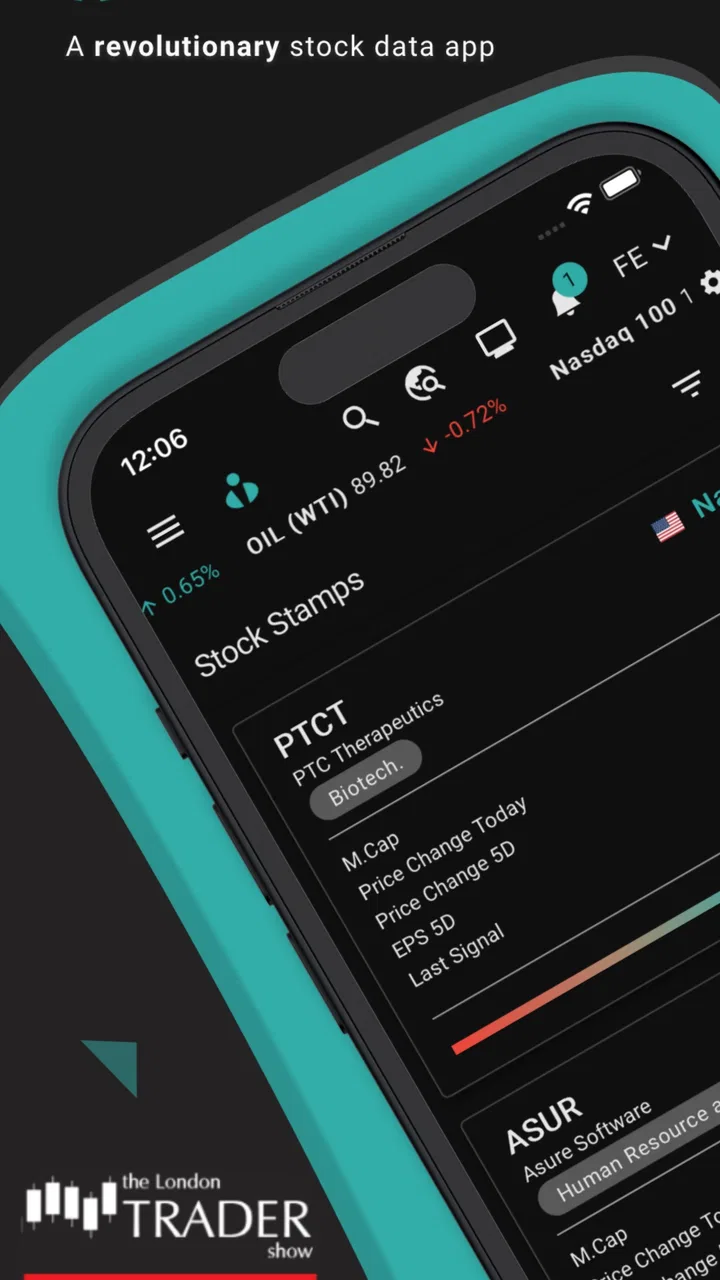
ORTEX is a stock research and analytics app designed to help investors study publicly traded companies before making investment decisions. It combines market data, short-interest information, stock signals, earnings-related insights, analyst expectations, and other research tools in one interface. It is more suitable for users who want deeper analysis than a basic price-tracking app, although beginners may need time to understand the terminology and indicators.
02Does ORTEX provide real-time stock prices and market data?
ORTEX offers market information and analytical data, but the exact timing and availability of quotes can depend on the market, exchange, region, and subscription plan. Some information may be delayed rather than truly real time. Before relying on the app for active trading, check the quote details and your broker’s platform for current execution prices. ORTEX should generally be treated as a research tool, not a replacement for a brokerage account.
03Is ORTEX free to download and use?
The app can generally be downloaded without an upfront charge, but access to its most advanced research features may require a subscription or in-app purchase. Free access may be limited by the number of indicators, reports, alerts, or stocks available. Pricing and included features can change, so review the current subscription terms in the app store before starting a trial. Also check renewal conditions if you do not intend to continue.
04Can ORTEX help me find short-squeeze or heavily shorted stocks?
ORTEX is particularly known for providing short-interest and short-squeeze-related analytics, including data that may help users evaluate short positions, borrow conditions, and potential changes in market sentiment. However, these indicators are estimates and should not be interpreted as guaranteed predictions. A stock with high short interest can continue falling, and squeeze signals can become outdated quickly. Always combine ORTEX data with financial statements, price action, liquidity, and risk management.
05Is ORTEX suitable for beginners, and can I use it to make investment decisions?
Beginners can use ORTEX, but the app is more useful after learning basic concepts such as short interest, utilization, borrow fees, earnings estimates, valuation, and technical signals. Its charts and scores can support research, yet they do not guarantee profitable results or provide personalized financial advice. Investors should verify important information independently, understand the risks of each security, and avoid making decisions based only on a single ORTEX rating or alert.
Pros
- Advanced analytics help identify trends
- momentum
- and potential market opportunities.
- Offers data-driven insights that can complement your own investment research.
- Useful visualizations make complex market information easier to interpret.
- Supports analysis across multiple stocks and financial indicators.
- Can help investors monitor market sentiment and changing conditions.
Cons
- Many advanced features may require a paid subscription.
- The volume of data can feel overwhelming for beginners.
- Analytics are not guarantees and may lead to misleading conclusions.
- Market data or indicators may not always update instantly.
- Primarily suited to active investors rather than casual users.

ORTEX - Stock Market Analytics
Gallery